
Whether you’re launching a solo show or co‑hosting a multi‑camera interview, the visual quality of your podcast can be the difference between a fleeting glance and a loyal audience. A good camera not only captures crisp, well‑lit footage but also integrates smoothly with streaming software, offers reliable autofocus, and fits within a budget that won’t drain your production funds. With countless models flooding the market, picking the right one feels overwhelming. That’s why we’ve narrowed the field to the six standout cameras that combine performance, ease of use, and value, and we’ll walk you through each option so you can make an informed decision.
6 Must-Have Cameras for Podcasting – Expert Picks
We’ve tested dozens of models, and these six standout for crystal‑clear video, easy setup, and seamless integration with any podcasting workflow.
6. Canon EOS M50 Mirrorless Camera

The 2026‑edition 8K Digital Camera brings professional‑grade imaging to a compact, travel‑ready body. Its 88 MP sensor captures ultra‑sharp photos, while the 8K video mode records every detail with stunning clarity. A 16× optical zoom lens lets you swing from sweeping landscapes to tight close‑ups without losing fidelity, and fast half‑press autofocus locks focus instantly.
Dual front‑and‑rear lenses make switching between selfies, vlogs, and group shots effortless, and the 3.2‑inch HD touchscreen provides intuitive framing and menu navigation—ideal for beginners and seasoned shooters alike. Built‑in Wi‑Fi streams files to your phone for instant social‑media sharing, and HDMI output lets you showcase your work on a TV or use the camera as a webcam for live streams.
The package is truly all‑in‑one: two rechargeable batteries, a 64 GB TF card, USB & HDMI cables, charger, lens hood, cap, cleaning cloth, bag, strap, and a hot‑shoe mount for external mics or lights. A built‑in flash brightens low‑light scenes, and the compact 5 × 2.8 × 3.4‑inch design fits easily into any bag, making it a perfect gift for creators on the go.
Pros
- Exceptional image quality – 88 MP stills and 8K video with 16× zoom deliver professional results.
- Versatile shooting – Dual lenses, touchscreen control, Wi‑Fi, HDMI, and hot‑shoe support cover photography, vlogging, and streaming.
- Comprehensive kit – Batteries, 64 GB card, accessories, and a protective bag mean you can start shooting right out of the box.
Cons
- Macro capability limited – Minimum focus distance is 10 cm and a dedicated macro lens is not included.
- Battery life may require management – High‑resolution video drains power quickly, so extra charging or spare batteries are advisable for long shoots.
5. DJI Osmo Pocket 3 Creator Combo
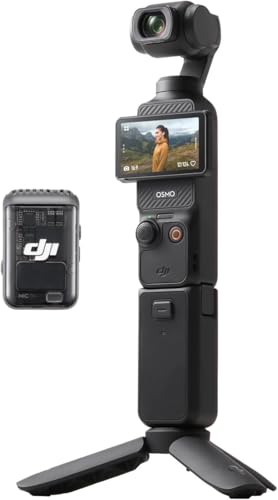
The DJI Osmo Pocket 3 Creator Combo packs a professional‑grade vlogging experience into a pocket‑sized body. Its 1‑inch CMOS sensor captures 4K video at up to 120 fps, delivering buttery‑smooth slow‑motion and crystal‑clear night‑time footage. The 2‑inch rotating touchscreen makes it effortless to frame shots in both landscape and portrait modes, while the advanced 3‑axis mechanical stabilization eliminates shake—even when you’re dancing, running, or following a playful pet.
ActiveTrack 6.0 keeps you perfectly centered, and fast, accurate autofocus locks onto subjects instantly, ensuring every detail stays razor‑sharp. With D‑Log M and 10‑bit color depth you can record up to one billion colors, giving you massive latitude for color grading sunrise or sunset scenes. Audio isn’t an afterthought: the included DJI Mic 2 transmitter provides stereo recording for clear, immersive sound, and the camera can link directly to two Mic 2 or Mic Mini units for interviews or livestreams. The compact design, long‑lasting battery handle, and mini tripod make it ready for any adventure, from globe‑trotting trips to family gatherings.
Pros
- Cinematic image quality – 1″ sensor, 4K 120 fps, D‑Log M 10‑bit for professional color grading.
- Rock‑steady footage – 3‑axis mechanical stabilization plus ActiveTrack 6.0 for smooth, centered shots.
- Integrated high‑quality audio – Stereo recording with DJI Mic 2, plus dual‑transmitter connectivity.
Cons
- Battery charger sold separately – you’ll need the optional 30 W USB‑C charger for fast recharging.
- Limited zoom range – the fixed‑lens design relies on digital zoom, which may not satisfy heavy telephoto needs.
4. Shcngqio 1080P HD Webcam

The Shcngqio TWC29 delivers crisp 1080P Full HD video with a wide‑angle lens that captures vibrant colors and smooth 30 fps motion—perfect for gaming, online teaching, and streaming. Its built‑in noise‑cancelling microphone isolates your voice, so you sound clear even in bustling environments. Thanks to automatic light‑correction technology, the webcam instantly adjusts brightness and color balance, giving you a polished look whether you’re in a dim bedroom or a sun‑lit office. A slide‑over privacy cover lets you block the lens with a simple swipe, providing instant peace of mind when the camera isn’t in use. Plug‑and‑play convenience means you can connect via USB 2.0/3.0/3.1 or OTG with the included 5 ft cable—no drivers required, and it works across Windows, macOS, laptops, desktops, and even compatible tablets. The eco‑friendly design uses sustainable materials and energy‑saving components, giving you long‑lasting performance while reducing environmental impact.
Pros
- Stunning 1080P wide‑angle video delivers detailed, vibrant visuals for any content‑creation need.
- Noise‑cancelling microphone ensures crystal‑clear voice transmission in noisy settings.
- Auto light correction + privacy cover keep you looking great and feeling secure without extra software.
Cons
- Fixed 30 fps frame rate may feel limiting for high‑speed gaming compared to 60 fps alternatives.
- The webcam’s 5 ft cable, while convenient, may be short for setups requiring greater reach.
3. EMEET PIXY PTZ Camera
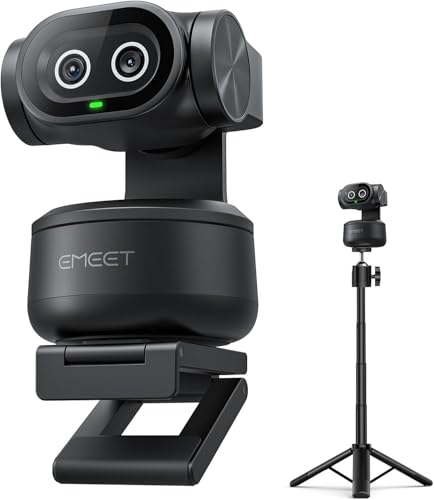
The EMEET PIXY Dual‑Camera AI‑Powered PTZ camera brings studio‑grade production to any desk. Its 4K main sensor (1/2.55” Sony, PDAF) delivers razor‑sharp video, while a secondary AI‑focused camera continuously analyzes face position, lighting and skin tone to keep you perfectly framed and lit—even when you move around. Mounted on an adjustable tripod that swivels 360° and extends from 6.7‑18.5 in, the kit adapts to portrait, landscape, fitness demos, beauty streams, online classes, or multi‑person meetings without the need for extra mounts. The 3‑chip architecture (imaging, AI‑assist, PTZ) provides ultra‑smooth 310° pan/180° tilt tracking, and a simple open‑palm gesture activates the camera for hands‑free operation.
Control is handled through the intuitive EMEET STUDIO software: preset angles switch instantly, Whiteboard mode auto‑detects boards, and privacy mode can be triggered by tilt, timer, or app. Audio is captured by a built‑in 3‑mic array with Live, Noise‑Canceling, and Original Sound modes, giving you crystal‑clear voice for podcasts, courses, or music without external mics.
Pros
- Blazing‑fast 0.2 s autofocus (PDAF + AI) keeps you in focus far quicker than typical 1 s+ webcams.
- Dual‑camera AI system ensures consistent skin tones and exposure across dynamic lighting conditions.
- Full PTZ control & gesture activation lets you follow action on stage or in a home studio without manual re‑framing.
Cons
- The advanced PTZ features may have a slight learning curve for beginners unfamiliar with preset programming.
- Requires a USB‑C connection and a reasonably powerful PC to run 4K 30 fps streaming smoothly.
2. Insta360 Link 2 PTZ Webcam

The Insta360 Link 2 is a premium PTZ webcam that brings true‑to‑life 4K video to any PC or Mac setup. Its 1/2‑inch sensor delivers crisp, HDR‑enhanced footage with excellent low‑light performance, while Phase‑Detection Auto‑Focus guarantees every frame stays razor‑sharp. The built‑in AI tracking physically pans and tilts to keep you centered, and the natural‑bokeh mode adds a DSLR‑like depth‑of‑field effect straight from the Link Controller. Audio is handled by an AI‑powered noise‑canceling microphone that filters out background chatter, ensuring crystal‑clear communication even in busy environments. Control is effortless: use the free Link Controller app on your phone, simple hand gestures, or the remote to start AI tracking, zoom, or switch to DeskView and Whiteboard modes. A built‑in privacy tilt‑down feature protects your privacy when you’re away. The webcam works seamlessly with Zoom, Teams, Twitch, and all major streaming platforms, making it a versatile tool for video calls, live streaming, and gaming.
Pros
- Stunning 4K video with HDR & low‑light capability – professional‑grade image quality for any lighting condition.
- AI tracking & PTZ movement – stays perfectly framed without manual adjustments.
- AI noise‑canceling mic & gesture control – clear audio and hands‑free operation for a smooth workflow.
Cons
- Higher price point compared to basic 1080p webcams, which may be a barrier for casual users.
- Requires a USB‑C port and sufficient processing power to fully leverage 4K and AI features on older computers.
1. Dakota 2025 8K Video Camera
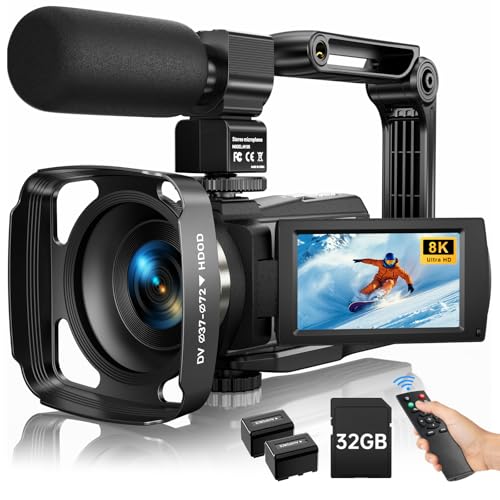
The 8K Video Camera Camcorder 2025 is a powerhouse for creators who demand cinema‑grade quality in a portable package. Capture ultra‑sharp footage at up to 8K @ 15 fps, or drop down to 6K/5K/4K @ 30 fps for smoother motion. Its 88 MP sensor and 18× digital zoom deliver stunning detail, while the 3‑inch 270° rotatable touchscreen makes self‑recording effortless. A dedicated remote control lets you frame shots from any angle, perfect for vloggers and solo shooters.
Stability is handled by 6‑axis anti‑shake technology, ensuring buttery‑smooth footage even when you’re on the move. Built‑in Wi‑Fi and the iSmart DV2 app let you transfer files instantly and stream directly to Facebook or YouTube. When the lights go down, the infrared night‑vision module produces clear black‑and‑white video in total darkness.
The camcorder doubles as a high‑quality USB webcam, and the included X‑Y stereo microphone offers three gain settings (+20 dB, 0 dB, –10 dB) for clean audio. Creative modes such as time‑lapse, slow‑motion, and continuous shooting let you capture every adventure—from hiking trails to sports events—while still being able to record while charging.
Pros
- Ultra‑high resolution (8K / 88 MP) with 18× zoom for professional‑grade visuals.
- 6‑axis stabilization + rotatable touchscreen for effortless, shake‑free vlogging.
- All‑in‑one connectivity: Wi‑Fi sharing, night‑vision, and USB webcam mode.
Cons
- 8K recording is limited to 15 fps, which may not suit fast‑action scenes.
- Audio quality can suffer in very noisy environments; optimal recording distance is under 2 m.
Buying Guide
Choosing the right camera for podcasting hinges on a mix of visual fidelity, ease of use, and how well it fits your production workflow. Look for a model that balances sharp image quality with reliable performance in typical indoor lighting.
- Resolution and sensor size – Aim for at least 1080p Full HD; a larger sensor (1‑inch or APS‑C) handles low‑light situations better and gives a more cinematic look.
- Autofocus and framing tools – Continuous AF, face‑detect, and a flip‑out screen let you stay in focus while monitoring yourself without a separate monitor.
- Connectivity and streaming support – USB‑C clean‑ HDMI output, webcam mode, or dedicated streaming firmware simplify hooking the camera into OBS, Zoom, or other platforms.
- Build quality and ergonomics – A sturdy body, solid mount options, and easy‑to‑reach controls reduce shake and speed up setup for frequent recordings.
- Price‑to‑performance and reviews – Compare specs against real‑world user feedback; a modest price tag is worthwhile only if the camera consistently meets podcasters’ expectations.
By weighing these factors—image quality, smart features, reliable connectivity, durability, and overall value—you’ll select a camera that elevates your podcast’s visual presence without adding unnecessary complexity.
Frequently Asked Questions
What type of camera is ideal for a podcast?
A mirrorless or DSLR camera with clean HDMI output is usually the best choice because it offers:
- High resolution (1080p – 4K) for crisp video.
- Interchangeable lenses to control depth of field and framing.
- Low‑light performance that reduces grain in dim studios.
- External microphone inputs (or the ability to sync separate audio tracks).
If budget is tight, a high‑quality webcam (e.g., Logitech Stream Cam) can work, but it won’t match the image control of a mirrorless/DSLR.
Should I prioritize resolution or low‑light capability?
Both matter, but low‑light performance often trumps raw resolution for indoor podcast setups:
- Lighting is rarely perfect; a camera with a large sensor (APS‑C or full‑frame) handles shadows better.
- 1080p is usually sufficient for most platforms; 4K is nice for future‑proofing but consumes more storage and processing power.
- If you can invest in good lighting (softboxes, ring lights), then a higher‑resolution camera becomes more beneficial.
Is a webcam enough, or do I need a dedicated camera?
- Webcam: Easy plug‑and‑play, works directly with most streaming software, and often includes built‑in autofocus. Great for beginners or low‑budget streams.
- Dedicated camera (mirrorless/DSLR): Provides superior image quality, lens flexibility, and better depth‑of‑field control, but requires a capture card or HDMI‑to‑USB adapter and more setup.
Bottom line: Start with a quality webcam to test your format; upgrade to a mirrorless/DSLR when you want a more polished look and have the budget for extra gear.
Conclusion
Choosing the right camera for your podcast hinges on a balance of image quality, ease of use, and seamless integration with your existing workflow. Prioritize devices that deliver crisp, well‑lit footage while offering reliable autofocus and low‑light performance, ensuring your visual content stays professional even in varied lighting conditions. Consider connectivity options—USB‑C or HDMI—that simplify hooking up to streaming software, and look for models that support external microphones and lighting for a fully polished setup. By focusing on these core features rather than brand hype, you’ll equip your podcast with a versatile visual tool that enhances storytelling, engages viewers, and grows your audience over time.